

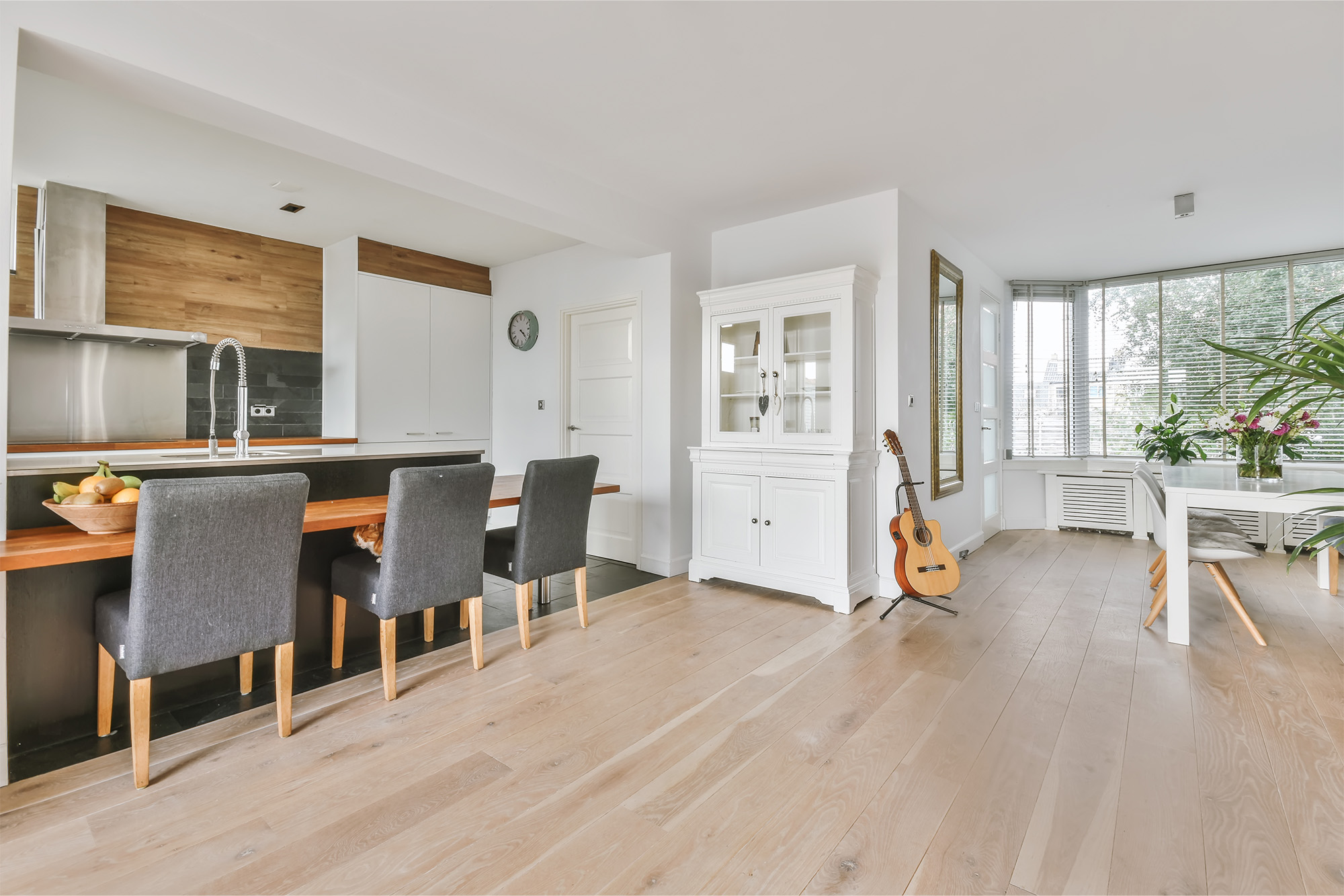
Can you install hardwood flooring in a busy kitchen?
Yes, you can successfully install hardwood floors in an active kitchen when you select engineered hardwood planks, apply a durable protective finish, and maintain proper indoor humidity levels. For busy kitchens in Mayfield Heights, engineered hardwood delivers exceptional dimensional stability against moisture spills, pet claws, and regional seasonal temperature shifts.
When you manage a bustling home in Northeast Ohio, your kitchen serves as the command center for cooking, morning routines, homework, and entertaining. That high volume of foot traffic means your flooring must resist wear while looking warm and inviting. At Marshall Flooring, we help you choose surfaces that withstand daily life without sacrificing style. Here is what you need to know about planning a kitchen hardwood installation that holds up to daily family life.
Why Hardwood Works Beautifully in Modern Kitchens
Traditional kitchen designs often relied solely on ceramic tile, but modern open-concept floor plans have changed how you navigate your home. Connecting your kitchen seamlessly with adjoining living areas creates visual continuity and makes your living spaces feel larger.
Seamless Transitions and Timeless Warmth
Installing hardwood across your main floor creates an unbroken visual line from your entryway into your cooking space. Hardwood also provides natural underfoot resilience, which feels softer and warmer during cold Northeast Ohio winter mornings than rigid stone or porcelain tile. Whether you are prepping meals or helping your children with school projects at the kitchen island, a wood floor cushions your footsteps and provides comfortable support throughout the day.
Exceptional Long-Term Value
Hardwood flooring remains one of the few home improvements that consistently adds enduring value to your property. When you invest in premium hardwood from a Premier Flooring Center, you ensure your materials are Durability and Performance Certified. With proper care and the support of our team, your kitchen hardwood will serve your family for decades.
Engineered vs. Solid Hardwood for Active Kitchens
The choice between solid and engineered wood is the most critical decision you will make for a kitchen installation. Because your kitchen experiences plumbing appliances, sink splashes, and fluctuating humidity, the structural construction of your boards matters.
Why Engineered Hardwood Leads the Way
Engineered hardwood consists of a genuine hardwood veneer bonded over cross-laminated structural wood plies. This cross-grain design stabilizes the plank, dramatically reducing expansion and contraction when indoor humidity levels rise during muggy Lake Erie summers or plummet during dry winter heating cycles. For busy kitchens in Mayfield Heights, engineered hardwood offers superior resistance to warping, cupping, and seam separation.
The Realities of Solid Hardwood in Wet Areas
Solid hardwood planks are milled from single pieces of timber. While solid wood can be sanded and refinished multiple times, it reacts rapidly to moisture and ambient humidity changes. If an ice maker line drips or a dishwasher overflows, solid hardwood planks can cup or crown. We generally advise engineered hardwood profiles for active kitchen workspaces to ensure maximum peace of mind.
Choosing the Best Wood Species, Textures, and Sheens
Daily life in an active home brings dropped utensils, dog claws, and tracked-in grit. Choosing the right wood species and surface style keeps your kitchen looking fresh for years.
Select a Hard Wood Species
Wood hardness is measured by the Janka scale. For active kitchen environments, selecting a denser domestic hardwood species prevents indentations:
White Oak: Offers tight grain patterns, superior natural water resistance, and an exceptional Janka rating of roughly 1360.
Red Oak: Features pronounced, warm graining that hides micro-scratches and minor surface dents easily.
Hickory: Delivers one of the hardest domestic surfaces available with a Janka rating around 1820, making it ideal for large dogs and busy children.
Opt for Wire-Brushed or Matte Finishes
High-gloss, smooth hardwood surfaces show every speck of dust, pet hair, and surface scuff under direct kitchen lighting. Instead, look for wire-brushed, subtle hand-scraped, or low-gloss matte finishes. Textured surfaces distribute light differently, naturally disguising the gentle wear patterns of an energetic household. Factory-applied UV-cured aluminum oxide finishes deliver a tough protective barrier against everyday spills and kitchen foot traffic.
Managing Northeast Ohio Seasons and Kitchen Moisture
Living near Lake Erie means your home encounters wide seasonal swings, from damp Lake Effect snow in January to muggy heat in July. Safeguarding your kitchen hardwood requires proactive moisture habits and professional installation techniques.
Acclimation and Subfloor Preparation
We refuse to cut corners, and that principle begins with thorough site preparation. Before any installation begins, your hardwood planks must acclimate to your home's normal living environment. Our installers test subfloor moisture content across multiple points to verify your subfloor is flat, clean, and dry. Utilizing high-performance moisture barriers beneath your engineered wood prevents rising moisture from reaching your floorboards.
Establishing Kitchen Defense Habits
Active family living does not require walking on eggshells. You can preserve your hardwood floors with simple daily steps:
Place breathable, non-rubber backed runner rugs in front of your kitchen sink, prep counter, and refrigerator ice dispenser.
Wipe up spills, melted ice cubes, and dog water splashes promptly.
Keep your home's indoor relative humidity between 35 and 55 percent year-round using a central humidifier during winter and air conditioning during summer.
Add heavy-duty felt protective pads beneath all kitchen barstools, chairs, and movable kitchen islands.
Professional Installation and The Marshall Promise
A kitchen floor is only as durable as its installation. Kitchens present unique installation hurdles, including complex cabinet footprints, heavy appliances, dishwashers, and gas lines. Our experienced installation specialists take your project personally. We remove baseboards cleanly, undercut door jambs for a tailored fit, and ensure appropriate expansion gaps along room perimeters to let your floors breathe naturally.
Best of all, your investment is safeguarded by The Marshall Promise: If you don't love your new floor, we'll replace it. We treat you like family, ensuring your new kitchen flooring delivers the durability, beauty, and performance your home deserves.
Visit our showroom in Mayfield Heights or give our design experts a call to schedule your free in-home estimate and design consultation. At Marshall Flooring, we take pride in delivering the best service, premium products, and expert installation for you and your family across Mayfield Heights, Cleveland, and Cleveland Heights, OH.
Frequently Asked Questions
Can you put hardwood under kitchen cabinets and heavy appliances?
When you install engineered hardwood using a nail-down or full-spread glue-down method, you can place it underneath your kitchen cabinets and heavy appliances. However, if you choose a floating floor installation, cabinets and islands must not be anchored on top of the floating planks, as the added weight pins the floor and prevents necessary seasonal expansion.
What should you do if your kitchen dishwasher leaks onto hardwood floors?
Shut off the water valve immediately and soak up all standing surface water with dry towels. Place fans and dehumidifiers directly over the damp zone to circulate air quickly. If you have engineered hardwood installed with a quality moisture barrier, fast action often prevents lasting structural damage. Call our team if you observe lifting or cupping so our experts can assess whether individual planks require replacement.
How do you clean hardwood in a kitchen without ruining the protective finish?
Sweep or vacuum your kitchen floor frequently using a soft, bare-floor brush attachment to remove abrasive dirt and grit. For regular damp cleaning, use a microfiber flat mop lightly misted with a pH-neutral hardwood floor cleaner. Never use steam mops, abrasive scouring pads, ammonia, or oil-based soaps, as these products break down the protective factory wear layer and drive moisture deep into the board seams.
How does hardwood hold up to pets in active Cleveland area kitchens?
Hardwood holds up very well to pets when you select a dense hardwood species like White Oak or Hickory paired with a wire-brushed, matte finish. Keeping your pets' nails trimmed and wiping up water dish splashes right away prevents scuffing and moisture spots.


